March 18, 2009 at 8:00 am

Boston University Hillel House and The Rubin-Frankel Gallery are hosting a building-wide celebration focusing on sustainability-awareness. Featured at this celebration is the 4th Annual Student Art Exhibition entitled: “Sustainability”, a juried show of artwork by students from the Greater Boston Area. Events during this celebration will include live music, free food, several art exhibitions and social action activities. ALL EVENTS ARE FREE AND OPEN TO THE PUBLIC
March 17, 2009 at 2:24 pm
March 17, 2009 at 10:56 am

Law Professor Cornelius Hurley, director of the Morin Center for Banking and Financial Law and former counsel to the Fed Board of Governors, says taxpayer-owned insurance giant AIG should just not pay those executive bonuses and let them sue.
"Since the AIG bailout in September, the moribund company has paid out $120B to counterparties and others. The cynic in me says that there is a very good chance that a year from now the AIG bonus recipients will be employees of the AIG counterparties and that maybe, just maybe, these financial wizards did not drive the hardest bargain in settling with the counterparties in exchange for their future employment prospects.
"So how to get out of paying the bonuses? Just don't pay them, let them sue for their bonuses knowing there's going to be a massive counterclaim and a reevaluation of their performance over that last year or more."
Contact Cornelius Hurley, 617-353-5427, ckhurley@bu.edu
March 17, 2009 at 8:00 am

The Boston University Women's Studies program, along with BU WISE, is sponsoring an event entitled “Maria Mitchell, 19th Century Astronomer, and the Sexing of Science” today from 3 PM - 5 PM in the Hillel House, 213 Bay State Road, Boston. Renee Bergland, Professor of English at Simmons College, will discuss the work of Maria Mitchell, a Nantucket-native and famous woman scientist of the 1800's. EVENT IS FREE AND OPEN TO THE PUBLIC
March 16, 2009 at 3:41 pm

International Relations Professor Charles Stith, director of the African Presidential Archives and Research Center (APARC) and former U.S. ambassador to Tanzania, just returned from an 8-nation trip to Africa where he met with current and former leader to discuss the Obama administration's likely role on the continent. Stith was in Washington today to brief Senate Foreign Relations Committee chairman Sen. John Kerry on the trip.
"The United States has vital economic and security interests in Africa that must be addressed within the context of these complex and troubling times. The Obama administration must balance its human rights concerns for issues like Darfur, Congo, and Zimbabwe with human development needs that are served by such initiatives as the Millennium Challenge Account, the Africa Education Initiative, and the African Growth and Opportunity Act."
Contact Charles Stith, 617-353-5452, crstith@bu.edu
March 16, 2009 at 10:46 am
Law Professor Cornelius Hurley, director of the Morin Center for Banking and Financial Law (and early in his career responsible for executive compensation at Shawmut National Corporation, now part of Bank of America) says there should be no bonuses at bailed-out insurance giant AIG.
"It defies imagination that the Treasury Department would sign off on bonuses to AIG executives of any stripe, particularly to those in the company's infamous Financial Products unit. The claim that the bonuses are contractually owed is a fig leaf covering up corporate waste and abuse of taxpayer dollars on an enormous scale.
"At a minumum, any executives that choose to accept such bonuses should be required to demonstrate to the U.S. taxpayers that theire performance had nothing to do with the massive losses the firm is experiencing. Treasury should be talking with AIG and its executives about the disgorgement of bonuses awarded from 2004-2007, not negotiating over awards for the disastrous results of 2008.
"AIG is de facto a failed enterprise. Failed firms do not typically award bonuses to their executives. This is a clear example of what Chairman Barney Frank of the House Financial Services Committee refers to as the 'heads I win, tails I break even' mentality of executive compensation."
Contact Cornelius Hurley, 617-353-5427, ckhurley@bu.edu
March 13, 2009 at 11:12 am

School of Management finance Professor Mark T. Williams, an expert on energy risk management, says the global recession has overtaken the ability of the Organization of Petroleum Exporting Countries to set oil prices, which will be reflected in next week's OPEC meeting in Vienna.
"The global recession has put significant downward pressure on oil demand, forcing OPEC to be a price taker instead of a price setter. Complicating this is the fact that OPEC countries continue to rely heavily on oil revenue to support national budgets, so the recent free-fall in prices has pushed them into recessions themselves.
"OPEC countries have to jump-start their home economies and need more revenue to implement stimulus-type programs. When OPEC meets in Vienna on March 15, it is clear that these countries will make further cuts in daily oil-production targets. Equally clear is that this time the recession-driven market, not OPEC, is firmly in charge.
"Middle East OPEC countries influenced the last three major recessions - starting in 1973, in 1983, and today. Given the significance of oil in the global economy, it is nice to see that market forces - not OPEC - are finally determining this commodity's appropriate price."
Contact Mark T. Williams, 617-358-2789, williams@bu.edu
March 13, 2009 at 11:01 am
Saturday's meeting between President Obam and Brazilian President Luiz Inácio Lula da Silva, could pave the way for a new foreign policy in Latin America. It's a new alliances, according to Jeffrey Rubin, professor of history and an expert on Latin American foreign policy, "between two presidents who broke centuries-old barriers of race and privilege in their respective countries simply by assuming office." Professor Rubin's complete preview of this Saturday's meeting was published in a recent Christian Science Monitor op-ed.
March 12, 2009 at 3:03 pm
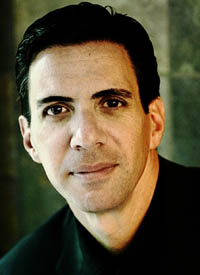
Journalism Professor Mitchell Zuckoff, author of "Ponzi's Scheme: The True Story of a Financial Legend," says in a New York Times blog that Bernard Madoff has become an emblem of a bad financial era.
"Once in a rare while, a financial fraud is so audacious and extraordinary, yet so in tune with larger societal forces and deep-seated fears, that it becomes the negative emblem of a financial era. Nearly a century ago, that's what happened with Charles Ponzi. Today, it's Ponzi's disciple, Bernard Madoff."
Meantime, writing for Fortune, Zuckoff compares the spouses of Ponzi and Madoff and how they were or were not engaged in their respective husbands' schemes.
"It's an open queston what Ruth Madoff knew of the deeds committed by her husband of nearly 50 years. But already, her actions contrast sharply with those of Rose Ponzi's causing suspicions to abound ... Rose Ponzi walked away from her husband's scheme broke but innocent. Given the pain Bernard Madoff caused by emulating Charles Ponzi, Ruth Madoff might want to consider following the example of Ponzi's wife."
Contact Mitchell Zuckoff, 617-353-5968, zuckoff@bu.edu
March 12, 2009 at 2:52 pm

Law Professor Keith Hylton, an authority on labor law, says the proposed Employee Free Choice Act will not likely close the gap between union share of employment in the public sector (44%) and in the private sector (7%).
"The gap between public and private sector union shares reflects the degree to which institutions are subjected to competitive pressure. There is almost no competitive pressure in the public sector, while there is a great deal of it in the private sector. This is a fact that the proposed statue cannot alter, so it is unlikely that its passage would lead to a substantial change in the union's share of employment in the private sector."
Contact Keith Hylton, 617-353-8959, knhylton@bu.edu