May 12, 2009 at 10:05 am
Ford will offer 300 million common shares to shore up cash reserves, avoid a federal bailout, and keep it out of bankruptcy as its Detroit competitors GM and Chrysler struggle to restructure. School of Management Dean Louis Lataif, a former Ford executive, can offer strategic perspective on the move.
Contact Louis Lataif, 617-353-2668, lelataif@bu.edu
May 12, 2009 at 10:00 am
Sources report that media mogul David Geffen is trying to buy a stake in the financially troubled New York Times. College of Communication journalism Professor Christopher Daly, who is writing a book on the struggles of newspapers to remain financially viable, is available to put the Geffen move in context.
Contact Christropher Daly, 617-353-4295, cdaly@bu.edu
May 11, 2009 at 4:43 pm
With the White House unveiling a $210 billion plan to tax more of U.S. firms' overseas earnings and crack down on tax-avoidance loopholes, School of Law Professor Daniel Berman, a former Treasury Department official and now director of the graduate tax program, can look at the historical track record of presidents on such proposals.
"Many of these proposals have been kicking around for a while. The proposal on dual-capacity taxpayers, for example (applying to special levies where the taxpayer gets an economic benefit) was something that I wrote and got included in the president's budget proposals more than a dozen years ago."
Contact Daniel Berman, 617-353-3105, bermand@bu.edu
May 11, 2009 at 10:34 am
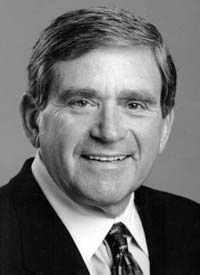
As a former long-time ABC News foreign correspondent, College of Communication journalism Professor Robert Zelnick can offer unique perspective on the decision by the Iranian government to free American journalist Roxana Saberi.
"The freeing of Roxana Saberi, a courageous journalist whose three months imprisonment rightly triggered international outrage, shows that even Iran cannot be completely tone deaf to world opinion. But I would be cautious before reading into this event a new Iranian responsiveness to President Obama's personal diplomacy or a willingness to yield in its effort to develop nuclear weapons. One happy ending does not validate a foreign policy steeped in myth."
Contact Robert Zelnick, 617-353-5007, bzelnick@bu.edu
May 11, 2009 at 10:30 am
With the Obama administration's top antitrust official announcing plans to restore an aggressive antitrust enforcement policy, School of Management Professor Michael Salinger, a former FTC official, can offer some perspective on the likely impact.
"I will be interested to hear the specifics of what she says about monopolization cases. This is an inherently more controversial aspect of antitrust enforcement. It appears that the administration might be signaling not just a return to the center but real lurch to the left."
Contact Michael Salinger, 617-353-4408, salinger@bu.edu
May 11, 2009 at 10:09 am
With the government's "stress tests" now completed on the nation's largest banks, School of Management risk expert Mark T. Williams, a former Federal Reserve bank examiner, looks at the lessons learned and what happens next. "Stronger capital requirements, better regulatory risk oversight, and banks with a stronger handle on fundamental risk-management principles should help reduce the chance of another banking meltdown," he says in a Reuters commentary.
Contact Mark T. Williams, 617-358-2789, williams@bu.edu
May 11, 2009 at 10:02 am

A Senate committee this week takes up a House-passed version of a bill that will give the FDA broad powers over the marketing and manufacturing of tobacco products -- including full disclosure of cigarette, cigar and other tobacco product ingredients. It also would require tobacco companies to expand the size of warning labels, ban harmful chemicals, and eliminate the use of such terms as "light," "mild" and "low." School of Public Health Professor Michael Siegel , MD, has researched and written about tobacco control and smoking policies. He is familiar with the differences between the House and Senate versions and can discuss the proposed regulations.
Contact Dr. Michael B. Siegel, 617-638-5160, mbsiegel@bu.edu
May 11, 2009 at 10:00 am

With leading health-care industry groups offering the Obama administration $2 trillion in savings over the next decade, School of Management Professor Stephen Davidson can discuss the implications. He is the author of the soon to be published book "In Urgent Need of Reform: Saving the U.S. Healthcare System."
"These organizatons are promising to reduce their charges in order to reduce the rate of increase in health care costs. If it works, that would benefit many individuals needing services. Their share of premiums might go up less because the insurers that provide their coverage would be paying out less to providers.
"There are two big 'ifs.' First is that since many of these organizations are membership groups, it will only work if their members -- the companies and professionals providing the services and products -- agree to do so. Second, even if physicians and hospitals agree to hold the line on their charges, if the volume of services increases, expenditures will continue to rise."
Contact Stephen Davidson, 617-353-7422, sdavidso@bu.edu
May 8, 2009 at 6:26 pm
With a scheduled May 11 blast off to the Hubble Space Telescope, a seven-person maintenance and repair crew on the space shuttle Atlantis will spend 11 days on a delicate overhaul that would make it 90 times more powerful than when it was launched in 1990. This fifth and final fix will extend's Hubble's life of sending continuous cosmic images to 2014. Astronomy professor John T. Clarke can provide a perspective having worked at NASA on Hubble before it was launched as deptuy project scientist. Later on he was part of the science team to build the replacement camera and repair the focus.
Contact John T. Clarke, 617-353-0247, jclarke@bu.edu